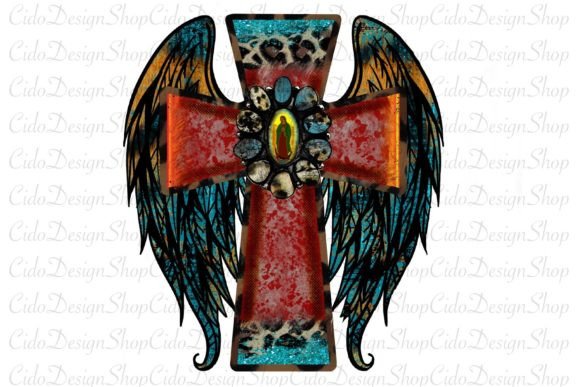
Review: Faith Png, Western Sublimation for Embroidery
When I sit down to evaluate a new digital asset for my studio, I am rarely looking for just "pretty." I am looking for viability. As an embroidery designer who frequently bridges the gap between digital graphics and physical stitch work, my primary concern is always translation. How does this image survive the transition from screen to fabric? Does it hold up under tension? Is it commercially viable for a small business owner trying to maximize profit margins while maintaining quality?
This week, I put Faith Png, Western Sublimation through its paces. The product listing describes it as a PNG file with a transparent background, rendered at 300dpi, categorized under Print Templates and Graphics. It explicitly states that this is not an SVG file. For those of us in the machine embroidery space, that distinction is critical. A PNG is a raster image; it is pixel-based. This means we are not dealing with vector paths that can be infinitely scaled or easily converted into clean satin stitches without significant manual digitizing. We are dealing with a finished graphic that must be interpreted by our eyes and potentially our software’s tracing tools before it ever touches a hoop.
The First Impression: Mood and Visual Personality
Upon opening the file, the first thing that strikes me is the thematic clarity. The "Western" aesthetic is currently dominating the handmade market, particularly in nursery decor, boutique children’s wear, and rustic-chic home goods. The design carries a specific mood—grounded, spiritual, yet rugged. It feels like something you would see on a hand-stamped leather patch or a high-quality cotton tea towel.
Because this is a graphics asset rather than a native machine embroidery design, the visual personality relies entirely on the source art. The transparent background is a huge plus for workflow efficiency. It allows me to instantly drop this element onto mockups for sweatshirt embroidery or tote bag design concepts without wrestling with white boxes or messy cutouts. The 300dpi resolution ensures that when I zoom in to inspect the edges for potential jaggedness, the detail remains sharp enough to make informed decisions about whether to use it as a direct print-transfer (DTG) base or if it needs to be traced into an applique design.
Real-World Application: From Screen to Stitch
Let’s talk about where this actually lives in a real project. I recently received a commission for a custom baby shower gift set. The client wanted a cohesive theme: a onesie, a receiving blanket, and a matching embroidered patch for a diaper bag. The vibe was "modern western nursery."
I considered using Faith Png, Western Sublimation for the central motif. Because it is a digital embroidery file in the sense that it is a digital asset ready for production, I had to decide how to execute it. Since it is not a pre-digitized embroidery file with built-in stitch types, I opted to trace the main shapes into my software. The result was a beautiful combination of fill stitch for the solid blocks of color and satin stitch for the borders. This approach gave the design a premium, tactile feel that a simple print would lack.
This type of handmade product benefits immensely from the clarity of the original PNG. When used on a cotton twill tote bag, the contrast pops. It works exceptionally well for personalized gifts because the text or focal point of the design remains legible even after stitching. Customers respond to designs that feel intentional. A blurry, low-res copy-paste looks cheap. A crisp, high-resolution source like this one allows for clean digitizing, which translates to professional-looking finished product lines that justify higher price points on Etsy or at craft fairs.
Where to Exercise Caution
No design is perfect for every surface. While Faith Png, Western Sublimation has strong visual appeal, there are specific scenarios where I would hesitate to use it without adjustments.
- Small Hoop Sizes: If you attempt to stitch this on a tiny accessory, such as a keychain or a miniature hat, the details may become muddy. Complex western motifs often rely on negative space and distinct lines. In a small hoop, these lines can bleed together, especially if the stitch density is too high.
- Textured and Stretchy Fabrics: This is a major pitfall for many designers. If you place this design on a heavy boucle knit or a highly textured linen, the underlying fabric grain will disrupt the clean lines of the PNG. Similarly, on stretchy fabrics like jersey knits for custom apparel, the tension of the thread can cause the design to pucker unless you use a proper tear-away or cut-away stabilizer. Always test on scrap fabric first.
- Dark Fabric Without Underlay: The PNG has a transparent background, but when stitched, it becomes opaque. If you are working on dark fabric, you must ensure your digitizing includes adequate underlay stitches to stabilize the base. Otherwise, the colors may look dull or uneven.
- Curved Surfaces: Applying this to a curved surface like a baseball cap requires careful placement. Western themes often have horizontal balance. If the curve distorts the symmetry, the design loses its impact. I recommend mapping the design on a digital mockup before committing to the hoop.
Impact on Brand Value and Customer Trust
For Etsy sellers and small shop owners, presentation is everything. Using a high-quality source like Faith Png, Western Sublimation directly impacts customer trust. Buyers can often tell the difference between a mass-produced, low-effort transfer and a carefully executed embroidery project.
When a buyer sees crisp edges, consistent thread colors, and no visible stabilizer residue, they perceive higher value. This design lends itself well to commercial embroidery projects because it is versatile. It fits seamlessly into a brand identity that values faith, tradition, and craftsmanship. Whether you are creating holiday embroidery collections or year-round printable mockups for your shop, having assets that photograph well and stitch cleanly is essential for conversion.
Furthermore, using a clean PNG allows for greater flexibility in your design assets library. You can easily resize it for different products, from large pillow covers to smaller aprons. This versatility is crucial for craft business owners who need to produce multiple SKUs quickly. However, remember that because this is a graphic and not a native digitization, you retain the responsibility for ensuring the final stitch-out is flawless. This adds a layer of work but also a layer of exclusivity to your offerings.
Practical Designer Notes for Implementation
If you decide to incorporate Faith Png, Western Sublimation into your next batch of baby embroidery or home decor items, keep these practical tips in mind:
- Check Licensing: Before selling any finished product, verify the commercial use rights of the PNG. Even though it is a high-quality asset, copyright restrictions vary widely among Print Templates providers.
- Test Contrast: Convert the PNG to black and white in your editing software. This helps you visualize how the shapes will interact with different thread colors. Ensure there is enough contrast between adjacent elements so they don’t blend into a blob after stitching.
- Inspect Small Details: Zoom in on the corners and fine lines. If the PNG resolution drops off in these areas, you may need to simplify the design during digitizing. Avoid trying to stitch tiny, pixelated details; they rarely translate well to thread.
- Stabilizer Selection: Choose your stabilizer based on the fabric weight. For lightweight kitchen towels or tea towels, a light tear-away might suffice. For heavier sweatshirts or denim, a heavy-duty cut-away is non-negotiable to prevent distortion.
- Mockup Validation: Use the transparent PNG to create realistic mockups. See how it looks on a mannequin or a flat lay. This step saves time by identifying layout issues before you waste thread and fabric.
In conclusion, Faith Png, Western Sublimation is a strong candidate for designers looking to add a touch of western elegance to their apparel decorators or maker portfolios. It is not a plug-and-play machine embroidery design in the traditional sense, but rather a high-fidelity source material that rewards careful digitizing. For those willing to put in the extra effort to trace and refine, the payoff is a professional, market-ready embroidery project that stands out in a crowded marketplace.